 Skip to content


Table of Contents
- Fleet Key Management vs Manual Key Tracking: Side-by-Side
- How Manual Key Tracking Works in Practice
- Benefits of Electronic Key Cabinets
- Key Tracking Audit Trails: Why They Matter
- Automotive Locksmith Services for Fleets
- Where Manual Tracking Still Makes Sense
- Choosing the Right Setup for Your Fleet
- Frequently Asked Questions
Last Updated: October 2, 2026
Fleet Key Management vs Manual Key Tracking: Side-by-Side
Fleet key management is the controlled storage, issue and return of vehicle keys using a system that records who took what and when. Manual key tracking does the same job with a paper logbook or a wall board. The difference sounds small. In practice, it decides how quickly you spot a missing key, how easily you prove who had a van last, and how much of your week disappears into chasing signatures. This guide from EBM Auto Keys sets out where each approach wins, where it fails, and how to choose for a working fleet.
The comparison comes down to three things: accountability, speed of recovery when something goes wrong, and the admin burden on whoever runs the yard.
| Factor | Fleet Key Management | Manual Key Tracking |
|---|---|---|
| Record keeping | Automatic, timestamped | Handwritten, easy to skip |
| Who has which key | Visible in real time | Depends on the last entry |
| Overdue keys | Alerts raised automatically | Noticed when someone asks |
| Audit trail | Complete and exportable | Patchy, often illegible |
| Upfront cost | Hardware and/or subscription | A logbook and a hook board |
| Best for | Multi-vehicle, multi-driver fleets | One or two vehicles, one driver |
Winner: fleet key management for any operation running more than a handful of vehicles with multiple drivers. Manual tracking still works for a single vehicle used by one person, where the paperwork never has a chance to fall behind.
How Manual Key Tracking Works in Practice
Manual key tracking works by storing keys in a cabinet or on a board and recording each movement in a logbook. A driver signs a key out, writes the time, and signs it back in at the end of a shift. The system costs almost nothing to set up and needs no training.
That simplicity is also its weakness. The log only reflects what people remember to write down.
The Real Risks of a Paper Logbook
The biggest risk is not theft. It is the gap between what the logbook says and what actually happened. A driver takes a van at 6am, forgets to sign, and the next entry is someone else’s at 9am. Now the record is wrong, and nobody knows it.
Common failure points include:
- Keys returned but not signed back in
- A spare key taken without any entry at all
- Illegible or missing times
- No way to prove which driver had a vehicle on a given date
- A missing key discovered only when the vehicle is needed
If a vehicle is involved in an incident and your only record is a paper log, you may be unable to show who was driving. That gap matters for insurance claims and for any internal disciplinary process.
Benefits of Electronic Key Cabinets
An electronic key cabinet locks each key to a named user and records every transaction automatically. Access is granted by PIN, fob or biometric check, and the cabinet logs the time, the user and the key taken.
The practical benefits stack up quickly:
- No manual entries to forget or falsify
- Real-time visibility of which keys are out
- Automatic alerts when a key is overdue
- Reports you can export for audits or insurer requests
- Fewer keys lost, because every movement is attributable
For a fleet running multiple drivers across shifts, that accountability is the whole point. You stop relying on memory and start relying on a record.
What to Check Before You Buy
Not every cabinet suits every yard. Before committing, work through this checklist:
- Does it hold enough keys for your current fleet plus spares?
- Can it grant access by PIN, fob or biometric, and can you revoke a leaver’s access the same day?
- Does it alert you when a key is not returned on time?
- Can you export an audit trail as a CSV or PDF?
- Does it integrate with your existing fleet or booking software?
- Is the hardware rated for an unheated workshop or outdoor compound?
- What happens if the power fails or the network drops?
The last two catch people out. A cabinet that only works with a live internet connection is a problem in a yard with patchy signal.
Key Tracking Audit Trails: Why They Matter
Key tracking audit trails matter because they turn a vague question into a documented answer. When a van is damaged, a fuel card goes missing, or a vehicle is caught on camera, the audit trail tells you who had the key and when it came back.
A useful trail records four things for every movement: the key, the user, the time out, and the time back in. Anything less leaves a gap.
The value shows up in three places. Insurance claims move faster when you can show a clear chain of custody. Internal investigations stop being a matter of opinion. And routine checks, such as confirming a vehicle was off-site overnight, take seconds rather than a phone call round.
Paper can technically provide this. In practice, it rarely does, because the trail depends on every driver completing every line correctly, every time.
Automotive Locksmith Services for Fleets
Automotive locksmith services for fleets cover the key and lock problems that a management system cannot solve on its own. A cabinet tells you a key is missing. It cannot cut you a replacement, program a new transponder, or get you into a van whose key has snapped in the lock.
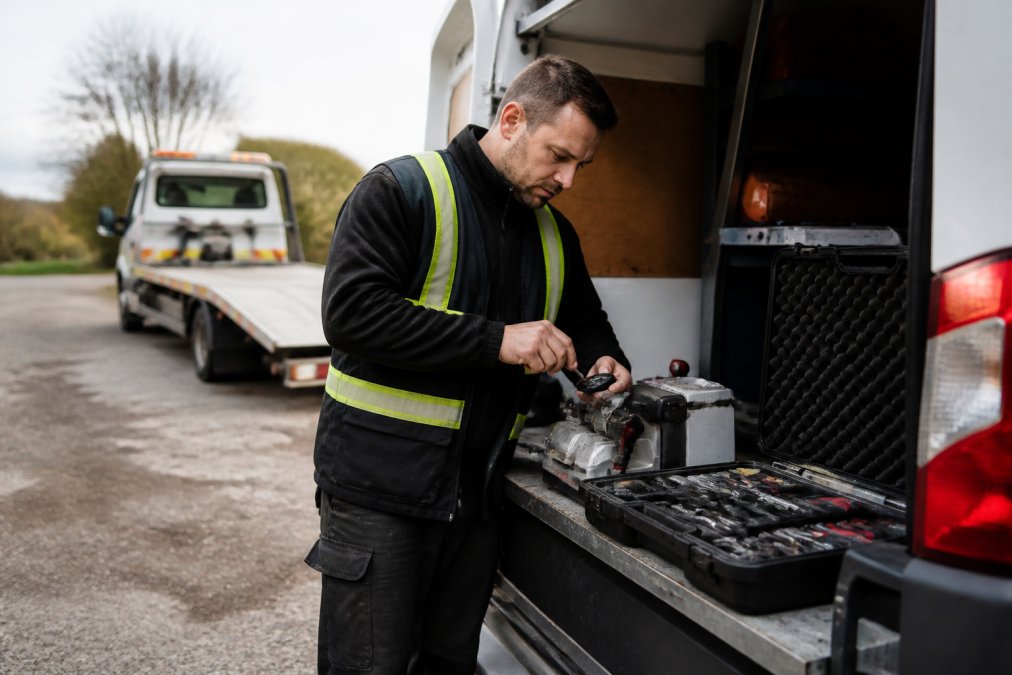
This is where a specialist mobile service earns its place. EBM Auto Keys provides 24/7 emergency call-out across the region, with non-destructive lock opening and same-day availability. That matters when a driver is stranded and the alternative is a recovery truck and a lost day’s work.
The same applies to immobiliser faults. A van that will not start is often a key or immobiliser problem rather than a mechanical one, and a dealer visit can mean a long wait. EBM Auto Keys handles complex immobiliser and non-start diagnosis, which keeps the vehicle in service rather than in a queue.
For fleet managers, the sensible approach is to pair the two. Use a management system for day-to-day control, and keep a mobile locksmith on call for the failures that no system prevents.
Where Manual Tracking Still Makes Sense
Manual tracking still makes sense for very small operations. If you run one or two vehicles, the same person drives them, and the keys live in one office, a logbook is proportionate. The admin load is trivial and the failure modes rarely bite.
If you are not ready for a cabinet, a simple middle step is a numbered key tag system with a daily reconciliation at shift change. It is not a full audit trail, but it catches most missing keys within 24 hours rather than weeks.
Choosing the Right Setup for Your Fleet
Choosing the right setup comes down to fleet size, driver turnover and how much proof you need. Match the system to the risk, not to the brochure.
Use this as a starting point:
- One vehicle, one driver: manual logbook is fine
- Two to five vehicles, shared drivers: numbered tags plus daily reconciliation
- Six to twenty vehicles, shift patterns: electronic key cabinet with alerts
- Twenty-plus vehicles or multiple sites: cabinet with software integration and exportable reporting
Frequently Asked Questions
What are the main risks of manual key tracking for vehicle fleets?
A paper logbook relies on drivers remembering to sign keys in and out, so entries get missed, backdated or written illegibly. When a key goes missing there is no reliable record of who last had it, which delays recovery and can leave a vehicle off the road. Fleet key management systems remove that guesswork by recording every check-out and return electronically, with timestamps and user names attached.
Can automated key systems reduce vehicle downtime?
They help in two ways. Automated alerts flag keys that are overdue, so a manager can chase the driver before the next booking is missed. And because electronic key cabinets keep a clear record of every key, you always know which vehicle is available. If a key is lost or the immobiliser faults, a mobile automotive locksmith can attend on site the same day rather than the van waiting days for a dealership slot.
How do you choose the right key management solution for a small fleet?
Start with how many vehicles you run and how often keys change hands. A handful of vans with one yard may only need a basic wall-mounted cabinet with PIN access. Larger operations, or those with multiple depots, need cloud-based systems that give remote visibility. Ask suppliers about installation requirements, whether the cabinet works offline, and how easily it integrates with your existing booking or fleet software before committing.
What is the difference between manual and electronic key control?
Manual key control means a physical logbook or sign-out sheet, often kept in an office drawer. Electronic key control uses a cabinet or smart box that releases a key only after a user identifies themselves by PIN, fob or fingerprint, and logs the transaction automatically. The practical difference is accountability: electronic systems produce a searchable record, while manual logs depend entirely on handwriting and honesty.
What should I look for in automotive locksmith services for fleets?
Look for a provider who offers 24/7 call-out, non-destructive entry and same-day availability, because a van stuck at the yard is lost revenue. Ask whether they handle immobiliser faults and non-start issues on site, and whether they work with businesses on ongoing arrangements rather than one-off emergency visits. A locksmith with motor trade experience can often diagnose a fault another trade has missed.
Losing a van key at 6am does not care what system you run. EBM Auto Keys provides 24/7 emergency call out, non-destructive lock opening and same-day service, backed by 18 years of motor trade experience and specialist diagnosis of immobiliser and non-start faults. Get started with EBM Auto Keys and keep your fleet moving.
