 Skip to content


Table of Contents
- What Is a Transponder Key Immobiliser System?
- How the Immobiliser and Transponder Key Work Together
- Common Car Immobiliser Problems and What Causes Them
- Why Your Car Key Is Not Recognised (and What to Check First)
- How Transponder Key Programming Works
- Getting a Replacement Transponder Car Key
- When to Call a Locksmith Instead of the Dealership
- Frequently Asked Questions
Last Updated: October 17, 2026
What Is a Transponder Key Immobiliser System?
A transponder key immobiliser system is a vehicle security setup that pairs a coded chip inside your key with an electronic unit in the car, so the engine will only start when the correct key is present. We explain it as two halves of one lock: the key carries the code, and the immobiliser checks it before allowing fuel or ignition to run.
The chip is tiny and passive. It has no battery and needs no charging. It wakes up when the car’s reader coil sends a low-energy signal through the ignition barrel, then answers with its unique ID.
That answer takes a fraction of a second. If the ID matches, the immobiliser stands down and the engine starts. If it doesn’t, the car will crank but won’t fire, or it won’t crank at all.
This is why a copied metal blade alone won’t steal a modern vehicle. Cutting a key that turns the barrel is easy. Cloning the chip is the hard part, and that is exactly the point of the design.
How the Immobiliser and Transponder Key Work Together
Think of it as a handshake that happens every time you turn the key. Four parts do the work:
- The transponder chip sits in the key head and holds a fixed or rolling code.
- The reader coil wraps around the ignition barrel and powers the chip.
- The immobiliser control unit compares the code against its stored list.
- The engine control unit only receives the go-ahead once the code matches.
When you insert the key, the coil energises the chip. The chip transmits its ID. The immobiliser checks it against the keys it has been taught to accept. A match releases the engine; a mismatch keeps it locked.
The DVSA guidance on vehicle identity and security treats this kind of electronic protection as a core part of modern vehicle security, which is why bypassing it is far harder than defeating a mechanical lock.
Most systems also link to the central locking. That’s why a failing chip can leave you with a car that unlocks fine but refuses to start.
Common Car Immobiliser Problems and What Causes Them
Car immobiliser problems usually trace back to one of a handful of causes, and the symptom often points to which one. Here are the ones we see most:
- A flat or failing key battery on remote keys, which stops the signal reaching the car.
- A damaged chip after a drop, a soak, or a key that’s been through the wash.
- A faulty reader coil around the barrel, which can no longer power the chip.
- Corrosion or a loose connection in the wiring between the coil and the control unit.
- A drained vehicle battery, which can wipe stored settings on some models.
- A failed immobiliser unit after water ingress or an electrical fault.
A common mistake is assuming a non-start is always the immobiliser. Sometimes it’s the starter motor, a fuel pump, or a crank sensor. Proper diagnosis separates the two before anyone replaces parts.
Jump-starting a modern vehicle incorrectly can spike the electronics and damage the immobiliser unit. If the car won’t start after a flat battery, get the fault read before you keep cranking, or you risk turning a simple reset into a costly repair.
Why Your Car Key Is Not Recognised (and What to Check First)
If your car key is not recognised, start with the simplest checks before assuming the worst. A surprising number of “dead key” calls turn out to be a battery or a second key that’s confusing the system.
Work through this list first:
- Try the spare key. If it starts the car, the fault is in the first key.
- Replace the remote key battery with the correct type.
- Check the key for cracks or water damage around the chip.
- Look for a warning light or message on the dash.
- Try a different ignition position, in case the reader coil is worn.
- Note whether the engine cranks but won’t fire, or does nothing at all.
If the spare works and the original doesn’t, you’re dealing with a key fault, not a car fault. If neither key works, the problem sits in the vehicle: the coil, the wiring, or the immobiliser unit itself.
That distinction saves time and money. It tells a locksmith or technician exactly where to look.
How Transponder Key Programming Works
Transponder key programming is the process of teaching the vehicle to accept a new key’s chip. The car has to learn the new code and store it alongside the keys it already trusts.
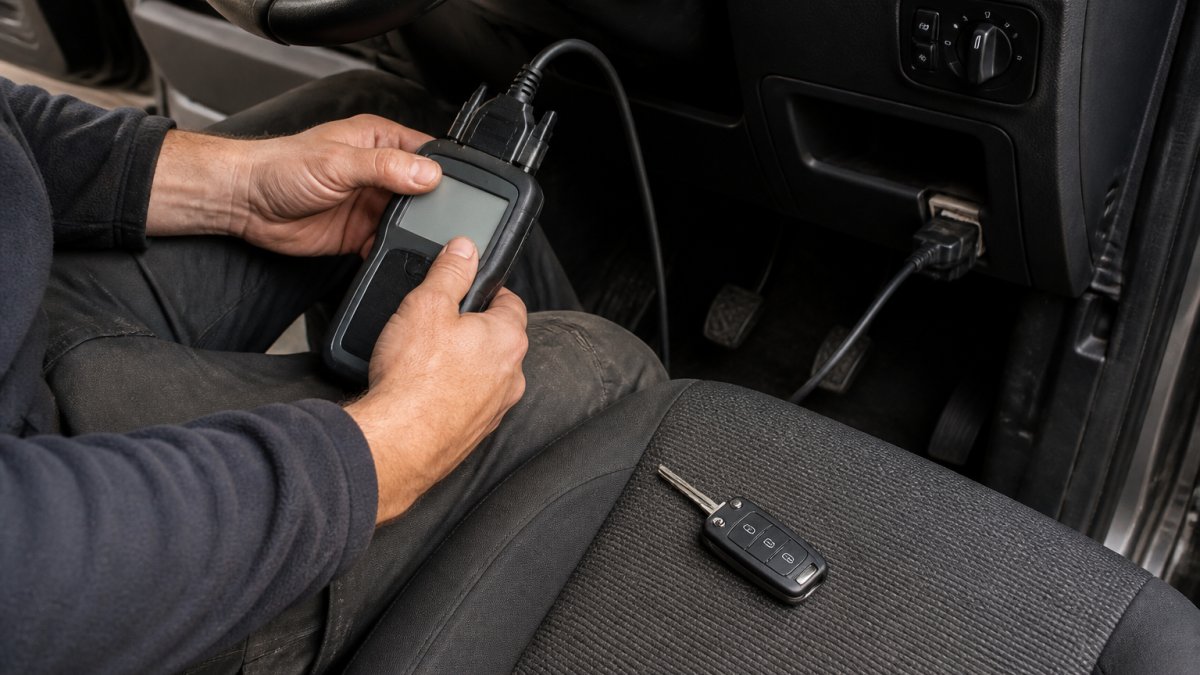
The method depends on the vehicle:
- On-board procedures let you add a key using a sequence of turns and presses, on some older models.
- Diagnostic programming connects a device to the OBD port and writes the new key to the immobiliser.
- Chip cloning copies an existing key’s code where the system allows it, useful for a spare.
Most modern vans and cars need the diagnostic route. The programming device talks to the immobiliser, clears space for a new key, and stores the fresh code. Get it wrong and the car may lock out all keys, which is why experience matters here.
Getting a Replacement Transponder Car Key
A replacement transponder car key needs two things done correctly: the blade cut to match your locks, and the chip programmed to your vehicle. Miss either and the key won’t work.
The process usually runs like this:
- Confirm the vehicle’s make, model, and year.
- Identify the correct chip type and key shell.
- Cut the blade to the original profile.
- Programme the chip to the immobiliser.
- Test every function, including central locking and starting.
Pricing depends on the key type, the vehicle, and whether you need one key or a full set, so we quote each job individually. A dealer will often need the vehicle booked in and may charge more for the same work.
For fleet managers, the smart move is a spare key cut and programmed before a driver loses the only one. It costs far less than an all-keys-lost recovery.
Keep one programmed spare per vehicle locked away and labelled. When a driver loses their key, you swap in the spare and get a replacement made at your convenience, not at roadside prices.
When to Call a Locksmith Instead of the Dealership
Call a locksmith when you need a key replaced, programmed, or an immobiliser fault diagnosed quickly and on-site. A mobile auto locksmith comes to you, which suits a van stuck on a job or a fleet that can’t spare a vehicle for a dealer booking.
We’d choose a locksmith over a dealership in these situations:
- You’ve lost all keys and the vehicle is stranded.
- You need a spare programmed the same day.
- The car cranks but won’t start and you suspect the immobiliser.
- A dealer has quoted a long wait for a booking.
- You run a fleet and need several vehicles sorted together.
The dealership is the right call for complex warranty work or a fault that needs manufacturer software. For key replacement, programming, and most immobiliser diagnosis, a specialist locksmith is faster and usually cheaper.
Our 18 years of motor trade experience means we’ve met most immobiliser faults before, from a simple dead chip to a van another locksmith and electrician couldn’t diagnose. We work non-destructively, so your locks and trim stay untouched.
A car that won’t start because of a key or immobiliser fault is frustrating, but it’s rarely the end of the road. The right diagnosis and the right key programming get you moving again, often the same day.
At EBM Auto Keys, we handle car key replacement, transponder key programming, all-keys-lost recovery, and complex immobiliser and non-start issues across South Wales. Our mobile service comes to you, with same-day availability and a 24/7 emergency call-out when you’re stranded.
Get started with EBM Auto Keys and get back on the road with a key that works first time.
Frequently Asked Questions
Will my car start if the transponder key is not recognised?
Usually not. The immobiliser cuts the fuel or ignition circuit when it does not receive the correct transponder code, so the engine turns over but will not fire. Some vehicles will start briefly and then cut out. If your car key is not recognised, check the key battery first if it is a remote fob, then try your spare. If neither works, the fault is likely in the transponder chip, the receiver coil around the ignition barrel or the vehicle’s immobiliser control unit, and it needs proper diagnosis rather than repeated attempts.
Can a locksmith programme a transponder key?
Yes. Automotive locksmiths carry diagnostic equipment that connects to your vehicle’s OBD port and writes a new transponder key to the immobiliser, including when all keys are lost. Transponder key programming typically takes between 20 and 60 minutes depending on the vehicle, and a mobile locksmith can do it at your home or workplace. Ask upfront whether the price includes programming and whether they can handle your specific make and model.
Can a flat car key battery stop the immobiliser recognising the key?
It can on many modern vehicles. The transponder chip itself is usually passive and does not need battery power, but the remote fob’s battery powers the central locking and, on some models, the keyless entry and start signal. A flat battery can therefore leave the car key not recognised even though the chip is fine. Try holding the fob against the start button or the marked receiver point on the dashboard, and replace the battery before assuming the key needs reprogramming.
What should I do if my car immobiliser light keeps flashing?
A flashing immobiliser light usually means the system has not matched the key. Try your spare key first, and check the fob battery. If the light stays on or flashes with a known-good key, the issue is likely the receiver, wiring or immobiliser unit rather than the key. Do not keep cranking the engine. Call an automotive locksmith who can read the fault codes on site and tell you whether it is a key programming job or a repair.
