 Skip to content


Table of Contents
- Understanding Commercial Van Fleet Lock Security Solutions
- Van Deadlocks and Mechanical Security Systems
- Fleet Key Management: Protecting Your Vehicle Keys Across Multiple Units
- When to Call a Commercial Vehicle Locksmith
- Van Security Checklist for Fleet Operators
- Comparing Lock Security Solutions for Commercial Fleets
- Implementing a Fleet Lock Security Strategy
- Frequently Asked Questions
Last Updated: October 5, 2026
Understanding Commercial Van Fleet Lock Security Solutions
Commercial van fleet lock security is the foundation of protecting your vehicles, cargo, and operational continuity. For fleet managers, the stakes are high: a single compromised van can mean lost inventory, downtime, and damage to your reputation.
The challenge isn’t just about picking a lock. It’s about creating a system that works across multiple vehicles, manages keys securely, and responds quickly when something goes wrong. This guide covers the practical solutions that actually work in the field.
Van Deadlocks and Mechanical Security Systems
A van deadlock is a secondary locking mechanism installed on commercial vehicles to provide additional security beyond the manufacturer’s standard door locks. Unlike the factory lock, a deadlock operates independently and requires a separate key, making it significantly harder for thieves to gain entry.
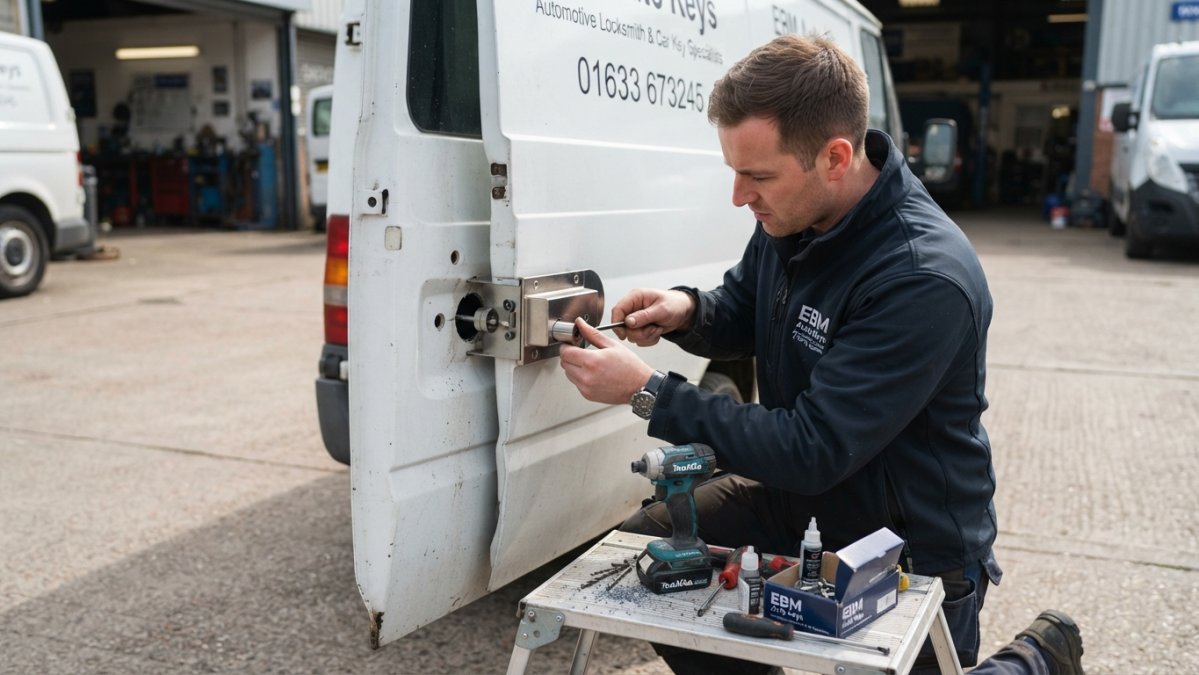
The installation process matters. A poorly fitted deadlock creates gaps that undermine the entire security system. A properly installed deadlock sits flush against the door, with reinforced strike plates that resist forced entry.
The best mechanical systems combine multiple layers. A single deadlock is a start, but adding a slam lock on cargo doors and a steering wheel lock creates a credible deterrent. Thieves move on to easier targets when they see multiple security measures in place.
Fleet Key Management: Protecting Your Vehicle Keys Across Multiple Units
Fleet key management is the process of controlling, tracking, and securing keys across your entire vehicle fleet. It’s often overlooked, but it’s where many security breaches start. A lost key, a stolen spare, or a key left in a van overnight can compromise your entire operation.
The basic principle is simple: fewer people should have access to keys, and those who do should be accountable. For fleets with 5-15 vans, this often means a designated keyholder, someone responsible for distributing keys at the start of the shift and collecting them at the end. For larger fleets, a key management cabinet with individual locks for each vehicle’s keys becomes essential.
Here’s what a practical fleet key management system looks like:
- Centralised key storage: All keys kept in a locked cabinet, not scattered across desks or in vehicles
- Key logs: A simple record of who took which key and when, updated daily
- Restricted access: Only authorised personnel can retrieve keys
- Spare keys kept separately: One spare per vehicle stored off-site or in a separate secure location
- Regular audits: Monthly checks to confirm all keys are accounted for
The cost of losing control of your keys is real. If a key goes missing, you either replace the lock or change the key code (if the vehicle supports it). More importantly, you lose the ability to track which keys are in circulation, a serious liability if a vehicle is involved in an incident.
Many fleet operators also use key tags with vehicle registration numbers, making it immediately obvious which key belongs to which van. This simple step prevents mistakes and reduces the time spent searching for the right key.
When to Call a Commercial Vehicle Locksmith
A commercial vehicle locksmith becomes necessary when mechanical solutions fail or when you need expert diagnosis. The three most common situations are lockouts, key loss, and immobiliser problems.
Lockouts happen when a driver is locked out of a vehicle or when a key is left inside. A professional locksmith can open the van without damaging the lock, critical for maintaining the integrity of your security system. Non-destructive entry is the industry standard; any locksmith who starts forcing doors should be replaced immediately.
Key loss is where many fleet operators first encounter a locksmith. If a driver loses a key and you have no spare, you need someone who can cut a new key on-site and programme it to match the vehicle’s immobiliser. This is especially important for modern vans with electronic key systems. EBM Auto Keys handles this routinely, arriving on-site with the tools to create a working key without requiring a trip to the dealership.
Immobiliser issues are the hardest to diagnose. An immobiliser is an electronic security system that prevents the engine from starting unless the correct key is used. When it malfunctions, the vehicle won’t start even with the correct key. Many fleet operators assume this requires a dealership visit, but a skilled locksmith with immobiliser diagnostic experience can often identify and fix the problem on-site, saving time and money.
The right locksmith should be available 24/7 for emergencies and should have experience with the specific van models in your fleet. Response time matters, if a van is out of service, every hour costs money.
Van Security Checklist for Fleet Operators
A practical security checklist helps you maintain consistent standards across your fleet. Use this as a starting point and adapt it to your specific vehicles and operation:
- Keys stored in a locked cabinet when vehicles are not in use
- Key logs maintained and audited monthly
- Spare keys kept in a separate secure location
- All keys labelled with vehicle registration numbers
- Drivers instructed to lock all doors and remove keys before leaving a vehicle
- Regular inspections of locks for signs of tampering or wear
- Contact details for an emergency locksmith saved and shared with all drivers
- Immobiliser status checked during routine maintenance
- Insurance documentation includes details of security measures in place
This checklist should be reviewed quarterly. As your fleet grows or vehicles age, security needs change. A van that’s five years old may need lock maintenance that a newer vehicle doesn’t.
Comparing Lock Security Solutions for Commercial Fleets
Different security solutions suit different fleet sizes and operational models. Here’s a practical comparison:
| Solution | Best For | Strengths | Limitations |
|---|---|---|---|
| Deadlocks only | Small fleets (3-8 vans) with straightforward operations | Low cost, easy to install, proven effectiveness | Requires key discipline, no tracking capability |
| Deadlocks + slam locks | Medium fleets (8-20 vans) with cargo concerns | Comprehensive door security, reduced key handling | Higher installation cost, more maintenance points |
| Key management cabinet | Fleets of any size with multiple drivers | Centralised control, clear accountability, audit trail | Requires dedicated keyholder, initial setup cost |
| Electronic access control | Large fleets (20+ vans) or high-security operations | Detailed tracking, remote access capability, audit logs | Significant upfront investment, requires IT support |
For most fleet operators, the combination of quality deadlocks on all doors and a simple key management system (centralised storage, key logs, restricted access) provides the best balance of security and practicality.
Implementing a Fleet Lock Security Strategy
A successful fleet lock security strategy requires three components: hardware, process, and accountability.
Hardware starts with assessing your current situation. Walk around your fleet and check each vehicle. Are the locks original equipment or have they been upgraded? Are there signs of tampering or wear? This audit takes an afternoon but reveals exactly what needs attention. Once you know the gaps, prioritise: deadlocks on all main doors first, then slam locks on cargo areas, then steering wheel locks as a visible deterrent.
Process means documenting how keys are handled. Write down who can access keys, when, and why. Create a simple key log, just a sheet recording the date, driver name, vehicle, time taken, and time returned. This takes 30 seconds per transaction but creates accountability and helps you spot patterns (like a particular driver being careless with keys).
Accountability means assigning responsibility. One person should own the key cabinet and the log. Drivers should understand that losing a key is a serious issue with consequences. Managers should review the log monthly and audit the cabinet to confirm all keys are present.
The implementation timeline depends on your fleet size.
Fleet lock security isn’t glamorous, but it’s foundational to protecting your vehicles and cargo. The combination of proper locks, disciplined key management, and access to expert help when things go wrong creates a system that actually works. When you need urgent assistance with lockouts, key loss, or immobiliser diagnostics, EBM Auto Keys provides same-day service with 18 years of motor trade experience. We handle non-destructive entry, key programming, and complex immobiliser repairs, the kind of problems that keep fleets running. Contact EBM Auto Keys for a consultation on securing your fleet.
Frequently Asked Questions
What are the best security measures for a commercial van fleet?
A layered approach works best: install quality deadlocks on all cargo doors, implement strict fleet key management protocols with limited key access, use immobiliser systems where available, and conduct regular security inspections. Pairing mechanical locks with professional key management reduces theft risk significantly. A commercial vehicle locksmith can assess your specific fleet and recommend tailored solutions based on van models and cargo value.
How should a business manage keys across its van fleet?
Establish a centralised key register documenting which driver holds which key and when it was issued. Limit spare keys to authorised personnel only, store master keys in a secure location, and implement a sign-out system. For lost or compromised keys, contact a commercial vehicle locksmith immediately to rekey affected vans. Regular audits of your fleet key management system prevent unauthorised access and simplify emergency response when keys go missing.
When should a fleet operator call a commercial vehicle locksmith?
Contact a locksmith immediately if a driver loses a key, a lock becomes damaged, the immobiliser malfunctions, or a van is locked with keys inside. Professional locksmiths offer non-destructive entry and can rekey or repair locks without damage. For fleet-wide security upgrades or after a security breach, a locksmith can assess all vehicles and implement consistent solutions across your fleet.
How often should commercial van locks be inspected?
Inspect locks at least quarterly as part of routine fleet maintenance, and immediately after any security incident or key loss. Regular inspections catch wear, damage, or tampering early. A commercial vehicle locksmith can perform comprehensive security audits and recommend preventative maintenance schedules tailored to your fleet’s usage patterns and environmental conditions.
What should a van security checklist include?
A van security checklist should cover: functional deadlocks on all cargo doors, immobiliser status, spare key storage, driver accountability for keys, regular lock inspections, emergency contact procedures, and incident reporting. Document when locks were last serviced and track any security breaches. Drivers should verify locks are engaged at shift end, and managers should audit compliance weekly to maintain consistent security across the fleet.
Which locks provide the best protection for commercial vans?
Van deadlocks offer superior protection compared to standard locks because they operate independently of the vehicle’s main locking system, making them harder to bypass. Combining deadlocks with immobiliser systems and proper key management creates comprehensive security. The best choice depends on your van models, cargo value, and operational requirements. A commercial vehicle locksmith can recommend specific lock types and security combinations suited to your fleet’s needs.
