 Skip to content


Table of Contents
- What Are Vehicle Defence Keys
- How Vehicle Defence Keys Prevent Theft
- Preventing Relay Attacks on Your Vehicle
- Van Security Upgrades and Key Systems
- Key Programming for Commercial Vehicles
- When to Call a Professional Locksmith
- Conclusion
- Frequently Asked Questions
Last Updated: September 25, 2026
What Are Vehicle Defence Keys
Vehicle defence keys are security devices designed to protect your car or van from theft and unauthorised access. They go beyond standard keys by incorporating advanced technology that makes it significantly harder for thieves to steal your vehicle.
The core function of vehicle defence keys is to prevent relay attacks and signal interception. Modern vehicles use wireless signals between the key fob and the car’s receiver. Criminals exploit this by amplifying those signals from a distance, allowing them to unlock and start vehicles without possessing the actual key. Vehicle defence keys interrupt this process through encryption and signal blocking technology.
At EBM Auto Keys, we understand the security concerns vehicle owners face. A vehicle defence key system can help make your vehicle’s communication more secure.
There are several types of vehicle defence keys available. Some use passive blocking technology that prevents signal amplification. Others employ active encryption that changes the authentication code with each use. The right choice depends on your vehicle type, age, and the specific threats in your area.
Why Vehicle Defence Keys Matter
Thieves target vehicles with outdated security systems. If your car was built before 2015, it’s particularly vulnerable to relay attacks. Vehicle defence keys provide a cost-effective upgrade without replacing your entire security system.
The peace of mind knowing your vehicle is protected is a significant benefit of vehicle defence keys.
How Vehicle Defence Keys Prevent Theft
Vehicle defence keys work by breaking the communication chain that thieves exploit. When a criminal attempts a relay attack, they use two devices: one near your key fob to capture the signal, and another near your vehicle to amplify it. This tricks your car into thinking the legitimate key is present.
A proper vehicle defence key system stops this at the source. The key uses encrypted signals that cannot be amplified or replayed by standard relay equipment. Each time you unlock your vehicle, the authentication code changes, making it impossible for thieves to record and reuse the signal.
Signal Encryption Technology
Modern vehicle defence keys employ rolling code encryption. This means the code transmitted between your key and your vehicle changes every single time you press the button. A thief would need to capture and decrypt the code in real-time, which requires expensive, specialised equipment most criminals don’t possess.
The encryption standard used in quality vehicle defence keys offers a high level of security, making your vehicle a less attractive target compared to vehicles with standard keys.
Passive vs Active Defence Systems
Passive systems work by blocking the signal transmission itself. They prevent your key’s signal from reaching beyond a certain distance, typically a few metres. This is effective against relay attacks since the criminal’s amplification equipment cannot capture a signal that never travels far from your pocket.
Active systems go further. They require the key to authenticate with your vehicle using a challenge-response protocol. Your vehicle sends a unique challenge code, your key solves it mathematically, and only then does the vehicle unlock. Even if a thief captures the response, it won’t work twice because the challenge was unique to that moment.
Preventing Relay Attacks on Your Vehicle
Relay attacks are the most common theft method targeting modern vehicles. Understanding how they work helps you protect against them effectively.
A relay attack happens in three steps. First, a thief positions themselves near your home or parked vehicle with a relay receiver. Second, a second criminal stands near your key fob (often inside your home) with a relay transmitter. Third, they communicate wirelessly between the two devices, amplifying your key’s signal to unlock and start your vehicle from a distance.
The attack takes seconds. Your vehicle never knows the signal travelled 50 metres instead of 2 metres. From the car’s perspective, the legitimate key is right there.
Practical Defence Strategies
Keep your key fob in a signal-blocking pouch when you’re not using your vehicle. These pouches are lined with material that prevents wireless signals from escaping. A quality pouch costs very little and eliminates the relay attack vector entirely.
Position your key away from doors and windows. The further your key is from the vehicle, the harder it is for a relay attack to work. Keeping your key in an interior room of your home makes the attack practically impossible because the signal has to travel through walls and distance.
Consider a vehicle defence key system with active encryption. This is the strongest protection because even if a relay attack somehow captures your signal, the authentication will fail. The vehicle simply won’t unlock or start.
Park in a garage when possible. This adds physical distance and signal obstruction. A locked garage makes relay attacks far more difficult because the criminal’s receiver can’t get close enough to the vehicle.
Warning Signs of Attempted Theft
Watch for unusual battery drain on your key fob. Relay attack equipment can cause your fob’s battery to drain faster than normal as it’s constantly transmitting to overcome the distance. If your battery dies much sooner than expected, have your key system checked.
Notice if your vehicle locks or unlocks randomly when you’re not using the key. This can indicate someone is testing relay equipment nearby. Report this to a professional locksmith immediately.
Van Security Upgrades and Key Systems
Commercial vans face different security challenges than private cars. Vans often carry valuable equipment, tools, or inventory. They’re parked in various locations throughout the day, making them vulnerable to opportunistic theft.
A comprehensive van security system starts with an upgraded key system. Standard van keys offer minimal protection against modern theft techniques. Vehicle defence keys specifically designed for commercial vehicles provide encryption and signal protection tailored to the threats vans face.
Multi-Layer Van Security
The most effective van security often combines several approaches, such as a vehicle defence key system, physical security measures, GPS tracking devices, and dashcams with motion detection.
For fleet managers, centralised key management systems offer control over which drivers can access which vehicles. This prevents unauthorised use and makes it easy to disable access if a key is lost.
EBM Auto Keys helps commercial operators with key programming for their specific vehicle’s immobiliser and can assist in ensuring consistent security protocols across their fleet.
Insurance and Van Security
Many insurance providers offer discounts for vans with advanced security systems. It’s advisable to check with your insurer about what security upgrades they recognise.
Document your security measures. Photograph your key system, locks, and any tracking devices. Keep receipts for upgrades. If your van is ever stolen, this documentation helps with insurance claims and police investigations.
Key Programming for Commercial Vehicles
Commercial vehicles often require specialised key programming that differs from standard cars. Fleet operators need systems that allow multiple keys to work with the same vehicle, enable quick key replacement, and maintain security across dozens or hundreds of vehicles.
Vehicle defence key programming for commercial use involves more than just cutting a new key. The key must be coded to your vehicle’s immobiliser, tested to ensure it communicates properly, and integrated into your fleet management system if you have one.
The Programming Process
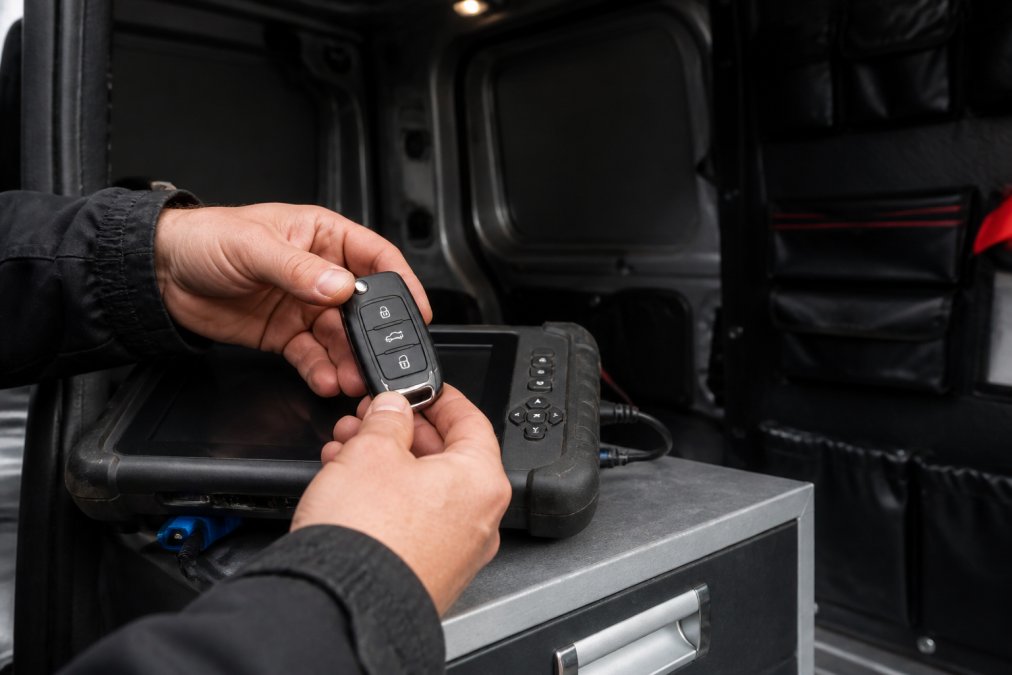
Modern commercial vehicle keys require electronic programming using diagnostic equipment. The locksmith connects to your vehicle’s onboard computer, verifies the key’s authenticity, and uploads the security codes. This process takes 20-30 minutes for most vehicles.
The key is then tested to confirm it locks, unlocks, and starts the vehicle. A properly programmed key will also integrate with any alarm systems or tracking devices your van has installed.
Fleet Key Management
For businesses with multiple vans, centralised key management can be beneficial. Approaches include standardising keys or programming each key to specific vehicles for tighter control.
Keep a secure record of which keys work with which vehicles. Store spare keys in a locked cabinet.
When to Call a Professional Locksmith
Some vehicle security problems are straightforward. A lost key or a broken fob are situations any automotive locksmith can handle. Other problems require specialist knowledge and diagnostic equipment.
Immobiliser Issues
If your vehicle won’t start even with the correct key, the immobiliser system may be faulty. This is a complex electronic system that requires diagnostic equipment to test and repair. An immobiliser problem can leave you stranded, and attempting amateur fixes often makes it worse.
Relay Attack Concerns
If you suspect someone has attempted a relay attack on your vehicle, a locksmith can upgrade your key system immediately. They’ll assess your current security, recommend vehicle defence key options, and install the system the same day in most cases.
Signal Issues
Sometimes your key fob works inconsistently. It might unlock the vehicle from 2 metres away but fail at 5 metres. This suggests a signal problem. A locksmith can test your key’s transmission power, check for interference, and repair or replace the fob.
Conclusion
Vehicle defence keys represent the most practical upgrade for protecting your car or van from modern theft techniques. Relay attacks are real, they’re increasing, and they’re easy to execute, but they’re equally easy to prevent with the right security system.
Frequently Asked Questions
What are vehicle defence keys and how do they work?
Vehicle defence keys are advanced security systems designed to protect against modern theft methods. They use encryption, rolling codes, and immobiliser technology to prevent unauthorised access. Unlike older mechanical keys, defence keys communicate with your vehicle’s security system, making it nearly impossible for thieves to bypass without the correct programming. Professional key programming ensures your vehicle recognises only authorised keys.
How do relay attacks work and can vehicle defence keys stop them?
Relay attacks exploit wireless signals from keyless entry systems by amplifying them to unlock vehicles remotely. Modern vehicle defence keys use distance-sensing technology and encrypted signals that are harder to intercept. Upgrading to systems with rolling codes and frequency-hopping encryption significantly reduces relay attack vulnerability. Professional diagnostics can identify if your vehicle needs enhanced security measures.
What’s involved in key programming for commercial vehicles?
Key programming for commercial vehicles requires specialist diagnostic equipment and knowledge of fleet security systems. The process involves coding new keys to match your vehicle’s immobiliser, setting security parameters, and testing functionality. Commercial vehicles often need multiple programmed keys for different drivers. Professional locksmiths with experience in commercial key programming can handle this on-site, ensuring all keys work reliably and securely.
Should I upgrade my van’s security system, and what options exist?
Van security upgrades depend on your current system and theft risk. Options include upgrading to higher-specification defence keys and installing additional immobiliser technology. Commercial van owners can benefit from fleet-wide security audits to identify vulnerabilities. A professional locksmith can assess your current setup and recommend cost-effective upgrades tailored to your vehicle type and usage.
