 Skip to content


Last Updated: 25 October 2026
Quick Summary
A key fob that stops working intermittently usually has a marginal fault: a weak battery, signal interference, or a worn contact inside the fob. Work through the causes in order, starting with the battery, then the signal, then the internals, so you do not replace parts that were never broken.
- A weak fob battery shows as reduced range, missed presses and a dim or flickering red light.
- Test a fob battery without a multimeter by pointing it at your phone camera and pressing a button.
- After a battery change, check the coin cell size, orientation and dirty contacts before suspecting pairing.
- Mobile masts, shop door sensors, Wi-Fi routers and dash cams can all block the fob’s low-power signal.
- Reprogramming needs the exact sequence for your model, a working battery and all fobs present.
Table of Contents
- Why Your Key Fob Works One Minute and Fails the Next
- Car Key Fob Battery Symptoms You Should Not Ignore
- Car Key Fob Not Working After Battery Change? Here Is Why
- Key Fob Signal Interference: The Invisible Cause
- How to Reprogramme a Car Key Fob
- Common Mistakes That Make Intermittent Fob Faults Worse
- Book a Diagnostic Check with EBM Auto Keys
- Frequently Asked Questions
Why Your Key Fob Works One Minute and Fails the Next
A key fob that works intermittently is almost always telling you something is marginal: a battery on its last legs, a weak signal, or a worn contact inside the fob. It is rarely random. At EBM Auto Keys, we see this fault most weeks, and the cause usually falls into one of seven categories we cover below.
Here is the good news. Most intermittent fob faults are cheap to fix once you know what you are looking at.
The trick is working through the causes in the right order. Start with the battery, then the signal, then the internals. Skip a step and you will replace parts that were never broken.
We will show you how to test each cause yourself, when to stop and call a specialist, and why the fault often returns if you fix the symptom instead of the source.
Car Key Fob Battery Symptoms You Should Not Ignore
A weak key fob battery shows up as reduced range, missed presses, and a fob that only works when you stand right next to the door. The car key fob battery symptoms are consistent, and they rarely appear all at once.
Watch for these signs:
- You need to press the button two or three times
- The range has dropped from several metres to under one
- The red light on the fob is dim or flickers
- The car responds only when you point the fob directly at it
- The fault is worse on cold mornings
Cold weather slows the chemical reaction inside a coin cell. A battery at 20% capacity in summer may fail completely in a frost. That is why so many drivers notice the problem first thing in the morning.
Testing a Fob Battery Without a Multimeter
You can test a fob battery without a multimeter using the camera on your phone. Point the fob at your phone’s camera lens and press a button. Most phone cameras pick up the infrared pulse that the naked eye cannot see.
If you see a bright, steady flash, the battery is likely fine. A faint or missing flash points to a failing cell.
This test is not perfect. It confirms the fob is transmitting, not that the signal is strong. But it separates a dead battery from a dead fob in seconds, which saves a lot of guesswork.
Here are the warning signs of a weak fob battery, and what each one tells you.
| Symptom | What it suggests |
|---|---|
| Need to press the button two or three times | Weak battery |
| Range dropped from several metres to under one | Weak battery |
| Red light on the fob dim or flickers | Failing cell |
| Car responds only when fob is pointed directly at it | Reduced signal strength |
| Fault is worse on cold mornings | Cold slows the coin cell reaction |
Car Key Fob Not Working After Battery Change? Here Is Why
A car key fob not working after a battery change usually means one of three things: the battery is fitted the wrong way round, the contacts are dirty, or the fob has lost its pairing with the car. The last one catches most people out.
Modern fobs hold a rolling code (Rolling code). Change the battery and the fob keeps its code, so it should work. But if the battery was left out for a while, or the fob took a knock during the swap, the pairing can drop.
Check these in order:
- Confirm the coin cell is the right size and seated flat
- Check the battery orientation against the old one
- Clean the metal contacts with a dry cloth
- Try the spare fob to rule out the car’s receiver
If the spare works and the original does not, the fault is in the fob. If neither works, the problem sits with the car.
Watch out: forcing a fob case shut can crack the circuit board or bend the battery clip. If the case will not close easily, stop and check the seating rather than pressing harder.
If a battery change has not solved it, it may be worth weighing up your options beyond the main dealer, which we cover in our guide to alternatives to dealership car key replacement.
Key Fob Signal Interference: The Invisible Cause
Key fob signal interference happens when another device drowns out the fob’s radio signal, so the car never receives the command. It is one of the most overlooked causes of intermittent faults, because nothing is actually broken.
The fob transmits on a low-power radio frequency. Anything nearby that emits on a similar band can block it. That is why your fob works in the driveway but fails outside a shop or a mobile mast.
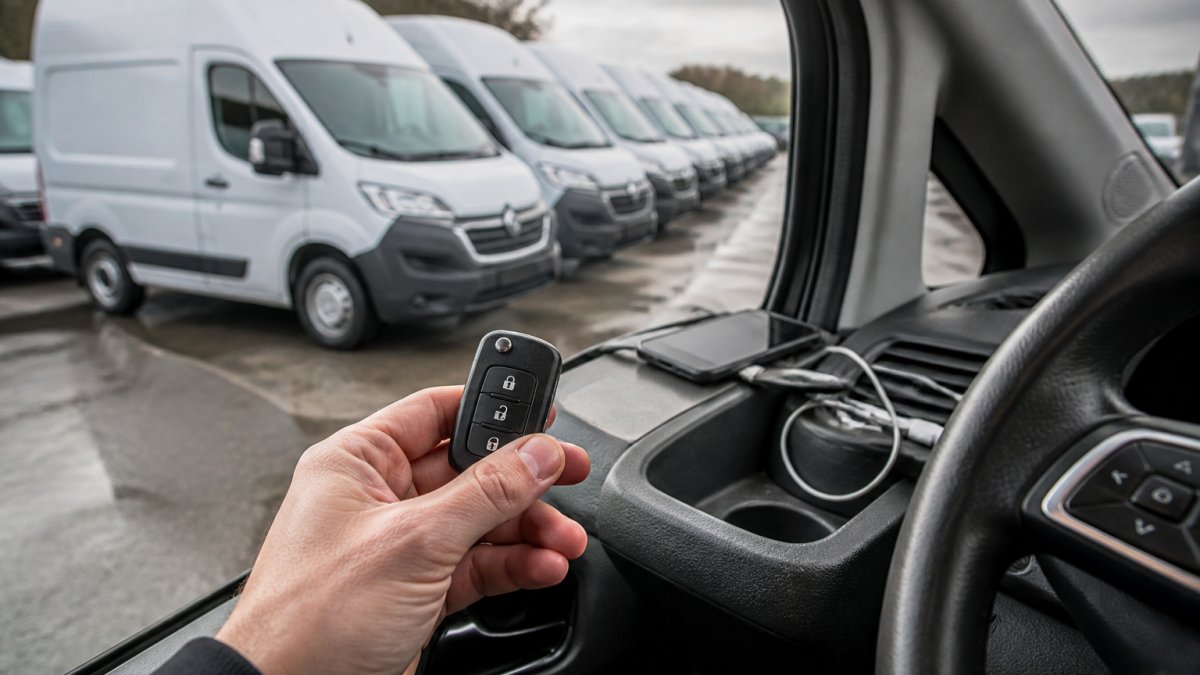
Common culprits include:
- Mobile phone masts and signal boosters
- Shop door sensors and security gates
- Wi-Fi routers and baby monitors
- Dash cams and phone chargers left running
- Large metal structures and underground car parks
Common Sources of Interference on Vans and Recovery Trucks
Vans and recovery trucks carry more kit than a family car, and that kit is often the problem. A dash cam, a tracker, an inverter, or a bank of charging cables can all sit close to where the fob signal needs to reach.
Fleet drivers often report that the fob fails only in the cab, not outside it. That pattern points straight at onboard electronics.
Try this. Move the phone and charging cables away from the dash and test again. If the fob springs back to life, you have found your culprit without spending a penny.
How to Reprogramme a Car Key Fob
Reprogramming a car key fob means re-syncing the fob to the car’s receiver so the two recognise each other again. The method depends on the make and model, and some need diagnostic equipment.
On older vehicles, a simple sequence often works. It usually involves turning the ignition on and off in a set pattern while pressing a fob button. You will need the exact steps for your model, which are in the handbook.
On newer vehicles, the fob pairs through the car’s onboard computer. That needs a diagnostic tool, and often a security code.
Before you start, make sure you have:
- The correct sequence for your exact model
- A working battery in the fob
- All fobs you want paired, in the car with you
- Ten minutes without interruption
If you are not confident, stop. A failed attempt can leave the fob unpaired, and some systems lock out after repeated tries.
When Reprogramming Fails: Immobiliser and Receiver Faults
If reprogramming will not take, the fault may sit in the immobiliser or the receiver, not the fob. This is where a lot of DIY attempts hit a wall.
The immobiliser is the car’s anti-theft system. It reads a transponder chip in the key (Immobiliser). If that chip has failed, or the receiver aerial has a wiring fault, no amount of reprogramming will fix it.
Signs of a deeper fault:
- The car cranks but will not start
- A key or padlock warning light stays on
- The fob pairs but the engine still refuses
- The fault came on after a flat battery or jump start
These need proper diagnosis. We have 18 years of motor trade experience working through immobiliser and non-start faults, and the fix is often a repair rather than a replacement.
Common Mistakes That Make Intermittent Fob Faults Worse
The biggest mistake is replacing the fob before testing the simple causes. A new fob is not cheap, and if the real fault is interference or a dirty contact, the problem returns within days.
Other common errors:
- Fitting a cheap coin cell that fails within weeks
- Prising the case open with a screwdriver and damaging the board
- Repeatedly pressing buttons in frustration, which drains the battery faster
- Ignoring a second failing fob, which points to a car-side fault
- Assuming the dealer is the only option
A common mistake is treating a fob fault as a fob problem. It is just as often a car problem.
If you rely on one key, a spare is the cheapest insurance against being stranded. Our guide to the benefits of spare car key duplication explains what is involved.
Book a Diagnostic Check with EBM Auto Keys
Intermittent faults rarely fix themselves, and they tend to fail at the worst possible moment. A proper diagnostic check finds the real cause rather than guessing at parts.
Our mobile service comes to you, whether you are at home, at work, or at the roadside. We cover automotive locksmith services across South West Wales, including key replacement, programming, and immobiliser repairs.
If you are unsure what a visit involves, our guide to the auto locksmith call-out fee explains it plainly. When you are ready, get in touch with our team and we will arrange a time that suits you.
Frequently Asked Questions
Why does my car key fob only work sometimes?
Intermittent key fob faults usually come down to one of four things: a battery that is losing voltage, a weak or worn contact inside the fob, radio interference at a particular location, or a failing receiver in the vehicle. Start by testing the fob from different distances and in different places. If it fails only in one spot, interference is likely. If it fails everywhere but works after a firm press, the internal contacts or battery are the usual culprits.
Can a weak key fob battery cause intermittent problems?
Yes. A key fob battery does not simply stop working; it loses voltage gradually. As it drops, the transmitter range shortens and the signal becomes unreliable, so the fob may work close to the car but not from across a car park. Cold weather makes this worse. If your fob has become fussy about distance, replace the battery before assuming anything more serious is wrong.
Can radio interference stop a car key fob from working?
It can. Key fobs share radio frequencies with many everyday devices, and strong local signals can swamp the fob’s transmission. Common sources include mobile phone masts, shop security gates, taxi radios, and even a phone charging on the dash beside the fob. If your key fob fails in the same location every time, move the vehicle a short distance and try again. Persistent interference in a work van often points to added equipment.
How do I reset or reprogramme a car key fob?
Some vehicles accept a simple in-car reset, such as turning the ignition on and off in a set sequence or holding a button combination, but most modern fobs need diagnostic equipment to pair with the immobiliser. If a battery change has left your fob dead, a reprogramme is usually the fix. An automotive locksmith can carry this out on site, which avoids a recovery to a main dealer.
A fob that fails now and then will eventually fail for good, usually when you are furthest from home. We diagnose the cause properly, repair what can be repaired, and program a replacement only when it is genuinely needed. Get started with EBM Auto Keys and book a diagnostic check, so you can stop guessing and get back on the road with confidence.

