 Skip to content


Last Updated: November 9, 2026
Quick Summary
To troubleshoot a flashing or stuck immobiliser light, first check it behaves normally at the ignition, then rule out a weak vehicle battery. Next test the key and fob, replacing a flat fob battery and trying a spare key. If the light stays on after these checks, the fault likely needs diagnostic equipment.
- Normally the immobiliser light flashes briefly at start-up, then goes out.
- A flat or weak vehicle battery can cause immobiliser faults even when the key is fine.
- Try your spare key: if it starts the car, the main key is the likely fault.
- Replace the fob battery with one of the correct type, shown in your owner’s manual.
- Do not keep cranking the engine, as this drains the battery and overheats the starter.
Table of Contents
- What the Immobiliser Light Is Telling You
- Step 1: Check Whether the Light Behaves Normally
- Step 2: Rule Out a Flat or Weak Battery
- Step 3: Test the Key and Key Fob
- Step 4: Try a Car Immobiliser Reset Safely
- When the Immobiliser Light Is On and the Car Won’t Start
- Booking Your Immobiliser Diagnosis With EBM Auto Keys
- Frequently Asked Questions
What the Immobiliser Light Is Telling You
The immobiliser light is a small warning symbol, usually a car with a key or a padlock, on your dashboard. To understand how the system works in more depth, read about the transponder key immobiliser system. It tells you the car’s anti-theft system is checking whether the key is allowed to start the engine. When everything works, the light flashes briefly when you turn the ignition on, then goes out. When something is wrong, it stays on or keeps flashing.
Most immobiliser faults are simple. They are often caused by a weak key-fob battery, a key that the car no longer recognises, or a flat vehicle battery. Less often, the cause is a faulty antenna ring around the ignition or a wiring problem. Work through the steps below in order, starting with the cheapest and easiest checks.
Why the light stays on or flashes
A light that stays on usually means the car has not accepted the key. A light that flashes quickly often means the system is detecting a problem and blocking the start. Many owners also see the light flash for a few seconds at start-up, which is normal.
- Solid light: the key may not be recognised, or the system has a fault.
- Fast flashing: the system is blocking the start. Check the key and battery first.
- Brief flash then off: the system is working as intended.
Step 1: Check Whether the Light Behaves Normally
Turn the key to the first position, without starting the engine. Watch the immobiliser light. A normal car shows the light for a few seconds and then turns it off.
Next, check the light’s behaviour with the key in the ignition and the engine off. If the light stays on the whole time, note it down. This tells you the system is not accepting the key.
A common mistake is to assume the car is broken straight away. Many cars show a warning light simply because the key is far from the ignition or the fob battery is low.
Step 2: Rule Out a Flat or Weak Battery
A weak vehicle battery can cause immobiliser faults, even when the key is fine. The system needs steady power to read the key and allow the start.
- Check that the dashboard lights and headlights are bright.
- Listen for slow cranking when you turn the key.
- If the car has been left unused, the battery may be flat.
If the battery is low, charge it or jump-start the car. After it has recovered, try the ignition again. If the light still stays on, move to the next step.
Watch out: do not keep cranking the engine for long periods. This can drain the battery further and overheat the starter motor.
Step 3: Test the Key and Key Fob
Next, test the key itself. Many immobiliser faults come from the key or the fob, not the car.
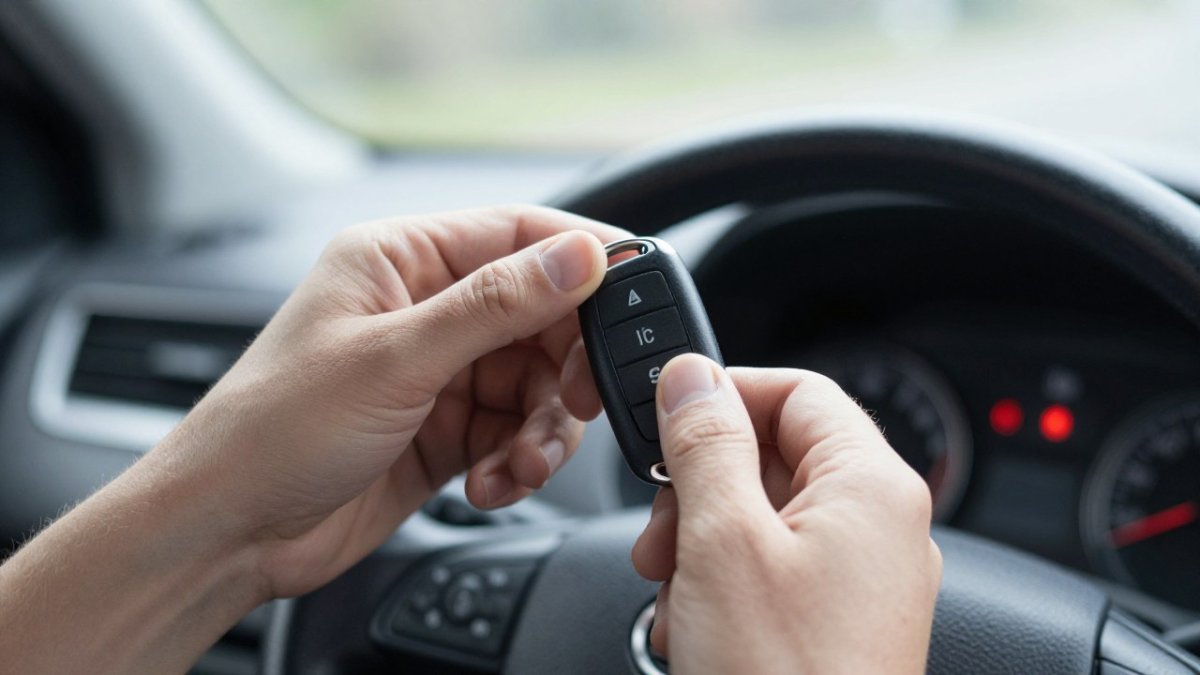
- Replace the fob battery with a new one of the correct type, which is usually shown in your owner’s manual. If the key or fob has failed completely, you may wish to consider alternatives to dealership car key replacement.
- Try your spare key. If the spare starts the car and the main key does not, the main key is the likely fault.
- Hold the fob close to the ignition or the start button when you try to start the car.
- Check the key for physical damage, such as a cracked casing or a worn blade.
Water can also damage a key. If the key has been wet, let it dry fully before testing again.
Many immobiliser faults come from the key or the fob rather than the car, so these checks are worth making in order.
| Check | What to look for | Action |
|---|---|---|
| Fob battery | Light stays on with the main key | Replace with a new battery of the correct type |
| Spare key | Spare starts the car, main key does not | Treat the main key as the likely fault |
| Key position | Light stays on at the ignition | Hold the fob close to the ignition or start button |
| Physical condition | Cracked casing or worn blade | Inspect and replace if damaged |
| Water exposure | Key has been wet | Let it dry fully before testing again |
Step 4: Try a Car Immobiliser Reset Safely
A reset is not a single procedure. On most cars the immobiliser is paired to the key and the control module, and the relearn routine is specific to the make, model and even the model year.
What a reset actually does
There are two different things owners call a reset:
- A key relearn: the car re-reads a key it already knows. This is often a sequence of ignition cycles, door locks or button presses, and it is the procedure most likely to be described in your manual.
- A module reset: the immobiliser control module is cleared and re-paired. This normally needs manufacturer-capable diagnostic equipment and, on many models, a security code or proof of ownership.
If the steps in your manual involve the immobiliser control module, stop there. Incorrect handling can lock the module or leave the car unable to start, and recovering from that is far more expensive than the original fault.
The battery-disconnect method
Disconnecting the battery for a short period is a common first attempt because it clears temporary faults in some control modules. It is not a universal immobiliser reset, and on many cars it does nothing for the immobiliser at all. If you try it:
- Turn off the ignition and all electrical items first.
- Check whether you have the radio code and any other security codes, because some cars ask for them after a power loss.
- Disconnect the negative terminal first, wait a short period, then reconnect negative last.
- Expect to reset the clock, radio presets and one-touch window functions afterwards.
Watch out: on some vehicles, disconnecting the battery can trigger an alarm or leave the immobiliser in a locked state, so only do this if your manual confirms it is safe.
Why model-specific guidance matters
Indicator behaviour and reset routines differ widely. A light that flashes slowly on one model may indicate a normal armed state, while the same pattern on another indicates a key recognition fault. Some cars require all keys to be present during a relearn; others relearn one key at a time.
When the Immobiliser Light Is On and the Car Won’t Start
A no-start with the immobiliser light on is not automatically an immobiliser fault. The most common misdiagnosis is assuming the anti-theft system is at fault when the real problem is a flat battery, a starter motor or a fuel delivery issue.
First, separate the no-start causes
- Flat or weak battery: dashboard lights dim or go out when you crank, cranking is slow, or you hear a rapid clicking. The immobiliser light may stay on simply because the module is not receiving stable voltage.
- Starter motor fault: the lights stay bright, you hear a single click or nothing at all, but the immobiliser light behaves normally.
- Fuel or ignition fault: the engine cranks normally and the immobiliser light goes out as it should, but the car will not fire. This points away from the immobiliser.
- Immobiliser fault: the engine may crank but not start, the light stays on or flashes rapidly, and the fuel or ignition is being held off by the security system.
If the light goes out normally during cranking and the engine still will not start, the immobiliser is probably not the cause. For the full range of automotive locksmith services available to fix an immobiliser problem, see what is offered for car key replacement, programming and emergency vehicle support.
What fault codes can and cannot tell you
A standard OBD-II scan can read engine and emissions codes, and on some cars it will show a communication or key-recognition code that points towards the immobiliser. It cannot, however, programme keys, relearn the immobiliser module or read every manufacturer-specific security code.
The faults that need diagnostic equipment
If the basic checks have not cleared the light, the remaining causes usually need a scan tool and wiring tests:
- A faulty antenna ring around the ignition barrel or start button
- Damaged wiring, corroded connectors or a poor earth
- A fault in the engine control unit or immobiliser module
- A key that has lost its pairing and needs reprogramming
- Water or moisture damage to the module or wiring
Security and proof of ownership
Reputable locksmiths and repairers will ask for proof of ownership before programming a key or touching the immobiliser. Have your vehicle registration document and photo ID ready. Never attempt to bypass or disable the immobiliser, as this can cause serious damage to the vehicle.
If the car cannot be moved safely
Do not keep cranking. Repeated attempts drain the battery and can overheat the starter. If the car is in a dangerous position, contact a recovery service. If you are locked out or stranded, guidance on finding immediate local help is available.
Booking Your Immobiliser Diagnosis With EBM Auto Keys
If you have worked through these steps and the immobiliser light still will not clear, EBM Auto Keys can carry out a professional diagnosis. We can check the key and the immobiliser system, and programme new keys where needed. Contact us to arrange a visit and get your car running again.
Ready to get back on the road? Get in touch with EBM Auto Keys today, and we will help you find out what is causing your immobiliser light.
Frequently Asked Questions
What does a flashing immobiliser light mean?
A flashing immobiliser light usually means the system is active and the car is not recognising the key, or that it is protecting the vehicle from being started. On many vehicles, a steady light when you switch on the ignition is normal for a few seconds, while a flashing light during operation points to a fault. Check your owner’s manual for the exact pattern your model uses, then work through the diagnostic steps in this guide. If the light keeps flashing and the engine will not start, a professional diagnosis is the quickest route to an answer.
Can a flat car battery cause an immobiliser warning light?
Yes. A weak or flat vehicle battery can disturb the immobiliser system because it needs stable voltage to read the key and authorise the start. Low voltage can make the light stay on, flash, or appear alongside other electrical symptoms such as dim dashboard lights or a slow starter motor. Test or charge the battery first, then check whether the immobiliser light behaves normally. If the battery has been disconnected or replaced, the system may need a reset before the car will start.
Should I keep trying to start my car if the immobiliser light is on?
No. Repeatedly cranking the engine when the immobiliser light is on can drain the battery further and does not fix a key recognition or electrical fault. Stop after a few attempts, let the system reset by switching the ignition off for a short period, and check the key and battery as described above. If the car still will not start, continued attempts add stress to the starter motor and battery without a clear benefit, so a diagnosis is the better next step.
When should I call an automotive locksmith about an immobiliser fault?
Call an automotive locksmith when the immobiliser light stays on after you have checked the battery and key, when the key is lost or damaged, or when the car will not start and you suspect a wiring, antenna ring or control module fault. Mobile automotive locksmiths can diagnose many immobiliser problems on site, which avoids a tow to a dealership in many cases. EBM Auto Keys offers mobile diagnosis and key programming in South Wales. For current prices or a quote, contact EBM Auto Keys directly, as costs depend on the vehicle and the work required.

