 Skip to content


Last Updated: November 7, 2026
Quick Summary
A key fob battery problem usually shows as a shorter range, buttons needing several presses, or a dim indicator light. Start by fitting a fresh coin cell of the correct code, with the positive side facing up, then clean the metal contacts. If it still fails, check the fob against the vehicle, since the fault may lie with the car rather than the fob.
- Match the code on the old battery, usually a CR2032, before buying a replacement.
- A fresh CR2032 should read close to 3.0V; below about 2.7V suggests a weak cell.
- Bent or corroded contacts can break the circuit even when the battery is good.
- Test a spare fob to tell whether the original fob or the vehicle is at fault.
- Call an automotive locksmith if the fob fails after a correct battery change and contact clean.
Table of Contents
- Spotting the Signs of a Weak or Failing Key Fob Battery
- Checking the Battery Type and Fitting It Correctly
- How to Replace a Car Key Fob Battery Step by Step
- Why Your Key Fob Is Not Working After Battery Replacement
- Key Fob Battery Contact Problems and How to Clean Them
- Why a Car Key Fob Battery Keeps Dying
- When to Stop Troubleshooting and Call an Automotive Locksmith
- Frequently Asked Questions
Spotting the Signs of a Weak or Failing Key Fob Battery
Many key fob problems start with the battery, and the signs are often easy to spot. Before you take the fob apart, check whether the symptoms match a flat or failing cell. A weak battery is the most common reason a fob stops working, and it is also the cheapest to fix at home.
Watch for these common signs:
- The range gets shorter. You have to stand right next to the car before the lock responds.
- The buttons need several presses before anything happens.
- The indicator light is dim, or it does not light up at all.
- The fob works in the morning but fails later in the day.
- The car’s own warning message shows a “key not detected” or “low battery” alert.
If you see one of these signs, a fresh battery is the first thing to try. A battery that looks fine can still give a weak signal, so do not assume the cell is good just because it is a few months old.
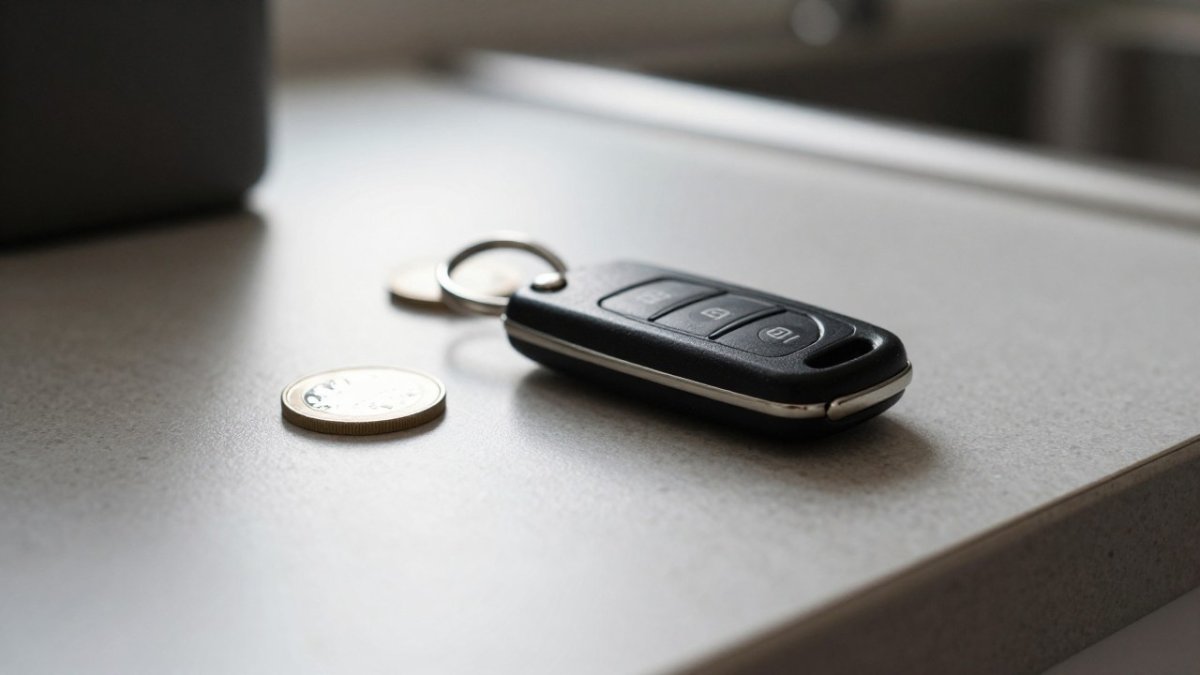
Checking the Battery Type and Fitting It Correctly
The battery is usually a flat coin cell, most often a CR2032 or a similar lithium type. Check the number printed on the old battery before you buy a new one. The code tells you the size and chemistry, so you can match it exactly.
When you fit the new cell, pay attention to the orientation. The positive side is normally the face with the printed writing, and it should face up. Fitting it the wrong way round will stop the fob from working and can cause damage over time.
Key checks before you close the case:
- Match the battery code on the old cell.
- Confirm the positive (+) side faces the correct way.
- Make sure the cell sits flat and is not tilted.
- Avoid touching the new battery’s surfaces with bare fingers, as skin oils can reduce contact.
How to Replace a Car Key Fob Battery Step by Step
Replacing a key fob battery takes about five minutes with the right tools. Work on a clean, flat surface so you do not lose small parts.
- Find the release point. Look for a small seam or slot on the edge of the fob. Some models also hide a physical key blade that can be pulled out, and the release is often underneath it.
- Open the case gently. Slide a small flat screwdriver or a fingernail into the seam and twist slowly. Do not force it, because the plastic can crack.
- Remove the old battery. Note which way it faces, then lift it out with a plastic tool if you have one.
- Fit the new battery. Place it with the positive side facing the correct way.
- Close and test. Snap the case shut, then test the lock and unlock buttons from a short distance and then from further away.
Why Your Key Fob Is Not Working After Battery Replacement
A fob that still fails after a new battery is a diagnostic problem, not a battery problem.
Step 1: Recheck the battery fit. Confirm the cell is the right code, sits flat and faces the correct way.
Step 2: Inspect the contacts. Look at the metal prongs and the battery holder. Bent prongs, corrosion or a film of grease will break the circuit even with a good cell.
Step 3: Test the fob itself. Press each button and watch the indicator light.
Step 4: Separate fob faults from vehicle faults. Try a spare fob if you have one. If the spare works, the original fob is faulty.
Step 5: Consider resynchronisation. Some vehicles need the fob resynchronised after a battery change.
If you have worked through all six steps and the fob still does not respond, the next step is to look at a spare key or a replacement fob. You can read more about your options in our guide to Alternatives to Dealership Car Key Replacement. For the broader range of car key options, see our Key Cutting in Swansea: A 2026 Guide to Car Keys, which covers what to expect from each option.
It can also help to understand the immobiliser system, which is often what blocks a fob from working. Our article on What Is a Transponder Key Immobiliser System? explains how the signal and the car’s security system work together.
If the fob still fails after a new battery, work through these checks in order, from the cell itself to the vehicle.
| Step | What to check | Result if faulty |
|---|---|---|
| 1. Battery fit | Correct code, flat, correct way round | Reversed or tilted cell stops the fob |
| 2. Battery voltage | Fresh CR2032 reads close to 3.0V | Below about 2.7V suggests a weak or counterfeit cell |
| 3. Contacts | Metal prongs clean and straight | Corrosion or bent prongs break the circuit |
| 4. Fob indicator | Light flashes when a button is pressed | No light points to the fob or its battery circuit |
| 5. Spare fob | Test a second fob if you have one | Spare works means the original fob is faulty |
| 6. Interference | Retest away from transmitters and masts | Works elsewhere points to local interference |
Key Fob Battery Contact Problems and How to Clean Them
Contact problems are one of the most overlooked causes of fob failure. The metal prongs inside the case carry power from the battery to the circuit board. When they are dirty, corroded or bent, the signal becomes weak or intermittent.
To clean the contacts:
- Open the case and remove the battery.
- Wipe the metal prongs gently with a dry cotton bud or a cloth dampened with isopropyl alcohol.
- Let everything dry fully before refitting the battery.
- If a prong is bent, ease it back into place carefully. Do not snap it.
Avoid scraping the contacts with a metal tool, because you can damage the plating. Clean contacts often solve a fault that looked like a dead battery.
Why a Car Key Fob Battery Keeps Dying
A coin cell in a key fob can last for several years, depending on how often the buttons are pressed and the conditions the fob lives in. If a new cell runs flat within weeks or months, something is draining it faster than normal. The cause is usually one of the following, and you can often identify it without tools.
- Accidental button presses. A fob loose in a bag or a tight pocket can press itself repeatedly. Each press transmits and draws current. A simple case or a dedicated pocket stops this.
- A stuck button. If one button feels spongy or does not click cleanly, it may be held down internally. Test by pressing each button and listening for the click; a button that never releases will flatten a cell quickly.
- Heat and cold. Leaving the fob on a dashboard in summer or in a car overnight in freezing conditions shortens cell life. Store it in a dry place at room temperature.
- Poor quality or counterfeit cells. Cheap coin cells often have lower capacity and a shorter shelf life. Check the use-by date on the packaging when buying replacement cells.
- A fault inside the fob. A damaged circuit board, a short or moisture ingress can keep drawing power even when the fob is idle. If the fob has been dropped, got wet or had a battery leak, this becomes more likely.
- A fob that is constantly awake. Some fobs communicate with the vehicle more often than others. If the vehicle has a fault that keeps waking the fob, the cell will drain faster; a spare fob that lasts normally points to the original fob rather than the car.
To narrow it down, fit a fresh branded cell and note the date. If it fails again within a few weeks, test the old cell with a multimeter: a cell that reads well below 2.7V after short use suggests a drain rather than a dud battery.
Storing the fob in a dry place, away from heat, using a good quality battery and keeping it in a case will often extend its life. If the battery keeps failing even with these steps, the fob may need professional inspection.
When to Stop Troubleshooting and Call an Automotive Locksmith
Home troubleshooting can fix many fob problems, but some faults need professional tools. Stop and call for help if:
- The fob does not respond after a correct battery change and contact clean.
- The car will not start even though the fob seems to work.
- You have lost all your keys and need a replacement.
- The problem looks like a fault in the vehicle’s immobiliser or wiring.
EBM Auto Keys offers mobile automotive locksmith services covering South Wales and surrounding areas. We handle car key replacement and key programming, and our Automotive Locksmith Services South West Wales cover what we can do on site. If you are not sure whether your problem is the fob or the vehicle, contact EBM Auto Keys and we can help you work out the next step.
Frequently Asked Questions
How can I tell if my car key fob battery is dead?
The most common sign is a shorter operating range, with the fob working only when you stand right next to the car. Other signs include needing several presses before the doors respond, a dashboard warning that the key battery is low, or no response at all. If the vehicle starts normally with the spare fob but not your main one, the battery in the main fob is the likely cause. Test the fob at close range first, then replace the battery, which is usually a CR2032 or similar coin-cell type. Check your handbook for the exact type before buying.
Why is my key fob not working after changing the battery?
The most frequent cause is incorrect fitting, with the battery placed upside down or the contacts not pressed firmly against the metal prongs. Check that the positive side faces the correct way as marked inside the fob, and that the battery has not been pushed out of position when the case was closed. Dirty or corroded contacts can also prevent a good connection. If the fob still fails after a correct fit, the circuit board may be damaged, or the fob may need reprogramming, which an automotive locksmith can carry out.
Does a car key fob need reprogramming after a battery change?
In most cases, no. Replacing the battery does not normally erase the fob’s programming, so it should work straight away once fitted correctly. If it does not respond after a correct replacement, the fob may have lost synchronisation with the vehicle, or a fault may lie elsewhere in the system. Reprogramming usually needs specialist equipment, so an automotive locksmith or dealership can check it. Keep the battery change simple first, and only seek reprogramming if the fob still fails.
When should I get a car key fob repaired by an automotive locksmith?
Call a professional if the fob still fails after a correct battery fitting and contact cleaning, if the buttons feel damaged or the casing is cracked, or if the fob has been dropped or exposed to water. Symptoms that point to a vehicle fault, such as the engine not starting even when the fob is detected, also warrant a professional diagnosis. An automotive locksmith can separate fob faults from vehicle faults and advise whether a repair or a replacement key makes more sense.

