 Skip to content


Last Updated: 28 October 2026
Quick Summary
Professional fleet key management turns an unpredictable cost into a predictable one by ensuring you know where every key is, who holds it and when it comes back. A locked cabinet, logged handovers and one controlled spare per vehicle cut downtime, tighten security and reduce lost keys.
- Store every key in a locked cabinet with a numbered slot per vehicle.
- Record each handover with the driver’s name, time and signature.
- Keep one controlled spare per vehicle, stored separately from the working set.
- Reconcile the cabinet against the master log at the end of every day.
- Restrict duplicate key cutting to one approved supplier.
Table of Contents
- Why Professional Fleet Key Management Pays Off
- The Benefits of Professional Fleet Key Management
- What a Fleet Key Management System Should Do
- Key Management Best Practices for Van Fleets
- Building a Fleet Key Sign-Out Process That Holds Up
- Common Mistakes That Undo Key Control
- When to Bring in a Specialist for Keys and Immobilisers
- Set Up Your Fleet Key Control with EBM Auto Keys
- Frequently Asked Questions
Why Professional Fleet Key Management Pays Off
A van off the road because nobody can find its key is one of the most expensive silences in a transport business. At EBM Auto Keys, we have 18 years of motor trade experience.
The Benefits of Professional Fleet Key Management
The clearest benefit is that a managed key system turns an unpredictable cost into a predictable one. You know where every key is, who holds it, and when it comes back. That single change removes most of the chaos that eats into a working day.
Less Downtime and Faster Driver Turnaround
Every minute a driver spends hunting for a key is a minute the van is not earning. A sign-out board with named slots and a written handover takes seconds to check. When a key goes missing, you know immediately rather than at the end of the shift. Recovery is faster because you can trace the last holder instead of searching every cab.
Tighter Security and Fewer Lost Keys
Loose keys are a security risk long before they are a cost. A logged handover creates accountability, and drivers treat a signed key differently from one tossed on a hook. Duplicating a controlled spare for each vehicle means a lost key does not strand the van. Our guide to spare car key duplication explains why a planned duplicate is far cheaper than an emergency call-out.
What a Fleet Key Management System Should Do
At minimum, the system should:
- Store every key in a locked cabinet with a numbered slot per vehicle
- Record every handover with a name, time and signature
- Hold one controlled spare per vehicle, stored separately from the working set
- Track duplicate keys and who authorised them
- Flag any key not returned by the end of the shift
At minimum, a fleet key management system should cover these essentials. For a deeper explanation of transponder immobiliser technology, see our dedicated article.
| Requirement | What it means |
|---|---|
| Locked cabinet | Numbered slot per vehicle |
| Handover record | Name, time and signature for every handover |
| Controlled spare | One per vehicle, stored separately from working set |
| Duplicate tracking | Record who authorised each duplicate |
| End-of-shift flag | Any key not returned is flagged |
Key Management Best Practices for Van Fleets
- Number every slot to match the vehicle registration
- Keep the master log in the yard, not in an office drawer
- Reconcile the cabinet against the log at the end of every day
- Restrict duplicate cutting to one approved supplier
- Review the log weekly for patterns, such as one driver repeatedly late returning keys
The Health and Safety Executive guidance on workplace transport is a useful reference for the wider duty of care around vehicle security on site. Key control sits inside that duty, not outside it.
Building a Fleet Key Sign-Out Process That Holds Up
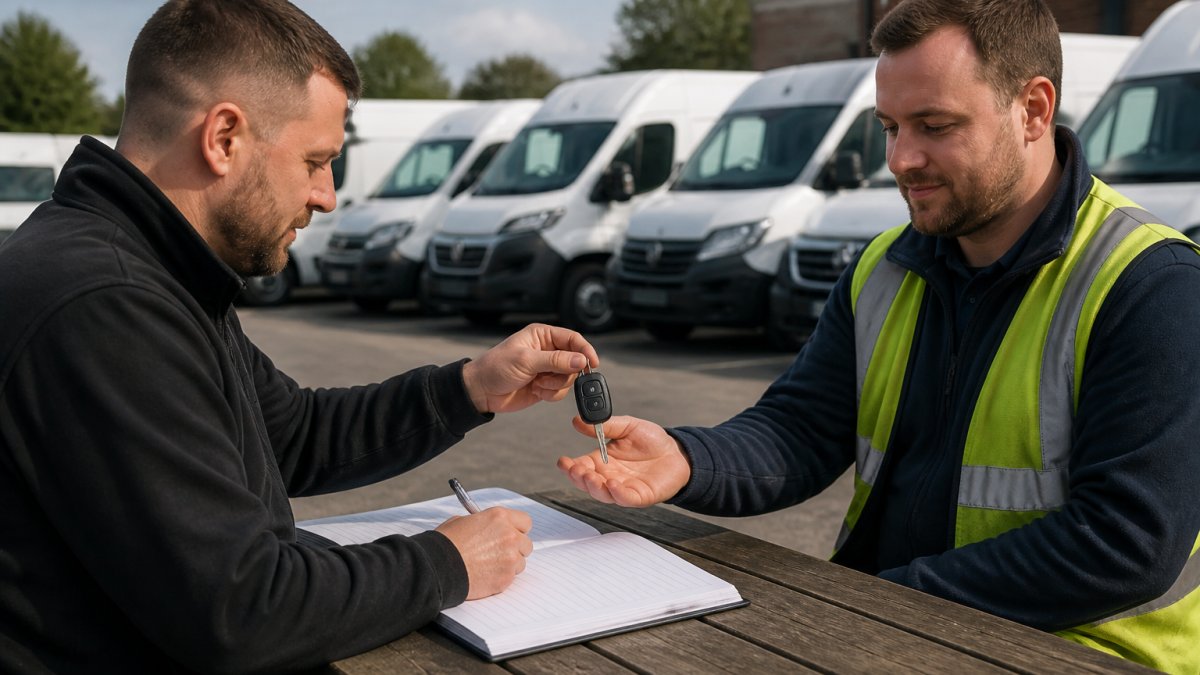
Keep the form short. A driver will not fill in ten fields at 6am. Three or four are enough to create accountability.
What to Record at Every Handover
- Vehicle registration and key number
- Driver name and signature
- Time out and expected return
- Condition note if the key or fob looks damaged
Common Mistakes That Undo Key Control
A second common error is letting anyone cut a duplicate. Uncontrolled duplication quietly multiplies your exposure, and you lose track of how many keys exist for each van.
When to Bring in a Specialist for Keys and Immobilisers
Our automotive locksmith services cover key replacement, programming, repairs and emergency vehicle entry for vans and recovery trucks across the region.
Set Up Your Fleet Key Control with EBM Auto Keys
We bring 18 years of motor trade experience, a 24/7 emergency call-out service and same-day availability, and we handle complex immobiliser and non-start faults. You can contact EBM Auto Keys with your questions, comments or feedback.
Frequently Asked Questions
What are the benefits of professional fleet key management?
The main gains are less downtime, tighter security and lower replacement costs. When every key has a named holder and a recorded handover, drivers spend minutes rather than hours hunting for keys, and a missing key is spotted the same day instead of weeks later. A professional fleet key management system also shows insurers and clients that vehicles are controlled, and it gives you a clear record if a van is stolen or involved in an incident.
How can a business keep track of vehicle keys?
Start with a single secure cabinet or tagged key board, one key per vehicle, and a written or digital log for every handover. Record the driver’s name, the registration, the date and time out, and the time back in. Key management best practices also include a named key controller, a spare key held separately from the working set, and a weekly audit that reconciles the log against the cabinet. That routine catches losses early, before they become an emergency call-out.
What should a fleet key sign-out process include?
A workable fleet key sign-out process covers four things: who holds the key, which vehicle it belongs to, when it left and when it returned, and who authorised it. Add a rule for out-of-hours returns, such as a secure drop box, and a step for reporting a lost key immediately. Keep the log visible in the yard office so drivers can sign in and out without hunting for a manager, and review it weekly for gaps.
Can a locksmith help with immobiliser problems on a fleet vehicle?
Yes. A mobile automotive locksmith with diagnostic equipment can read immobiliser faults, program replacement keys and cut new keys on site, which means the van does not need to be recovered to a dealership. For a fleet, that same specialist can also cut and program spare keys in bulk so you are never down to a single key per vehicle. Ask about same-day availability and whether they cover your area before you need them.

